
Early Butterflies
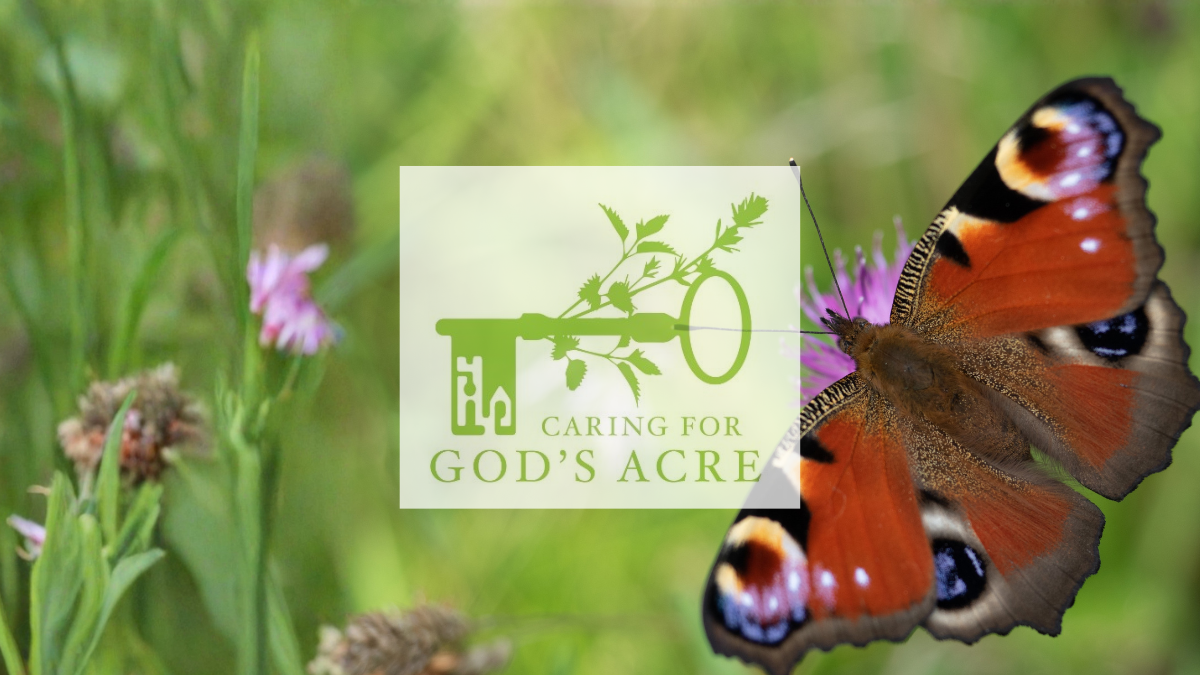
April is a lovely month to start searching for butterflies as quite a few of those which are often seen in churchyards, chapel yards or cemeteries are on the wing by now. Some species emerge from overwintering as adults, often looking a bit faded and battered, you’ll need to wait until summer to see the newly emerged, resplendent adults. You may find Peacocks and Red Admirals, feeding on flowers prior to egg-laying. Both of these spectacular butterflies lay eggs on nettles.
Look for the Comma, with its distinctive wing shape, its upper wings coloured orange with black markings whilst its underwings, visible when closed, are well camouflaged to disappear amongst dead leaves. Comma caterpillars also feed on nettles. Another butterfly that overwinters is the Brimstone, the male showing a characteristic yellow colour, the female more of a pale greenish yellow. It is thought the name butterfly comes from this species – a butter-coloured fly!
Other butterflies start emerging from pupation in April. These will look smart compared to those that have over-wintered, with bright colours and their wings unbattered at least at first. Have a look for the Holly Blue, known as the churchyard butterfly. This delicate blue butterfly will be seen in tree canopies, so you’ll need to look up! Four species from the same family, the Whites and Yellows can be seen, green-veined white, large white, small white and orange tip. Both small and large whites are nicknamed ‘cabbage whites’ by gardeners as their caterpillars can devour both brassicas and nasturtiums. The green-veined white is less of a villain for gardeners, it’s caterpillars, like that of the Orange Tip, feed on a variety of wild plants including cuckoo-flower, hedge mustard and garlic mustard.
Burial grounds are usually a mix of shady woodland areas and sunny grassland, and the butterflies found reflect both habitats and in particular, the scrubby edges between them containing coarse grasses, shrubs, nettles and brambles. Look for Speckled Wood emerging in April, its caterpillars feed on coarse grasses.
If you’d like to encourage butterflies then leave some nettles in full sun, whilst you may not wish to encourage nettles is there a place where they already occur? When planting trees, shrubs or flowers please use native species and include buckthorn or alder buckthorn, both food plants of the Brimstone. Perhaps most importantly, allow some areas to be a little bit scruffy particularly over winter. Leave some rough vegetation and dead stems as well as piles of autumn leaves, until all creatures that have been sheltering, hibernating and pupating have emerged into the spring sunshine.
As always, we’d love to hear about any butterflies you see.
All the best,
Harriet Carty
Diocesan Churchyard Environmental Advisor
www.caringforgodsacre.org.uk - individuals and groups in the diocese receive 20% members discount on all CfGA materials. Use the discount code diomem22