
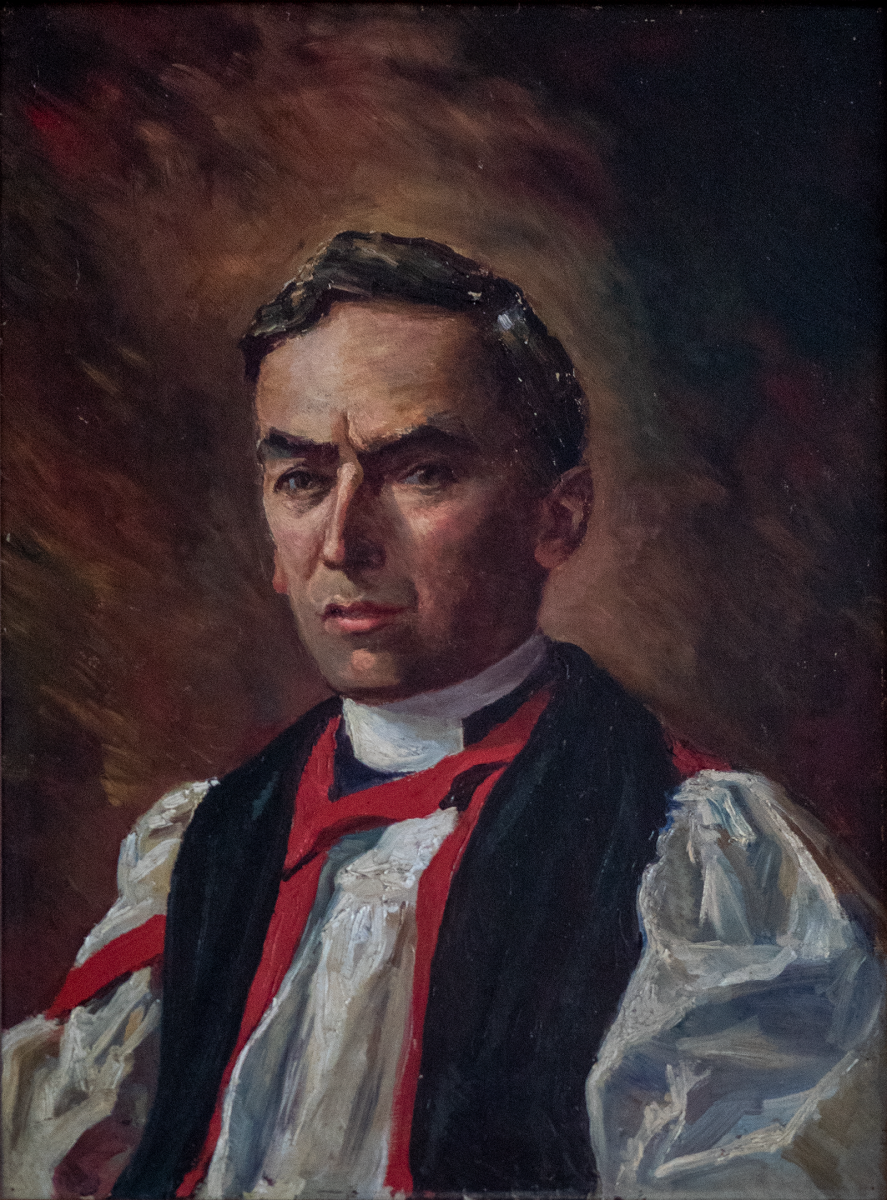
When Lloyd George nominated Henson as bishop of Hereford in 1917, there was an immediate outcry because of his perceived heretical views. At his election, ten prebendaries absented themselves and the resulting unpleasantness caused Henson much grief – he looked back to the day of his consecration in Westminster Abbey – 2 February 1918- with some sadness. In fact, although he was a theological liberal, he was only concerned, as his biographer, Owen Chadwick states, ‘to restate the doctrines of the Church of England in such a way that they will not offend intelligent men’. He stood for the right of Christians to profess their faith, while remaining agnostic about miracles. When he came to Hereford, he was immediately seen as a pastoral bishop – the first to drive around his diocese in a motor car – one which, apparently, regularly broke down! After only two years at Hereford, Lloyd George, translated Henson to Durham, where he became a powerful voice, both locally and nationally. Here, he showed his strong opinion on all subjects – a critic on moral grounds, of the behaviour of the Trades Unions. While loved by ordinary people, he came into fierce controversy with the miners’ leaders. He strenuously defended the Establishment of the Church of England, and after the 1927 Prayer Book fiasco in Parliament, he became its most vocal assailant.
Herbert Hensley Henson 1918-1920
When Lloyd George nominated Henson as bishop of Hereford in 1917, there was an immediate outcry because of his perceived…