
What makes a walk a pilgrimage? by Revd Simon Lockett
Revd Simon Lockett is Vicar of the benefice of Madley with Tyberton, Peterchurch, Vowchurch and Turnastone, in Herefordshire's Golden Valley.…

In this week’s video, the Bishop reflects on the Archbishop of Canterbury’s visit, celebrates the many ministries across the Diocese, and looks ahead to a season of renewal as we build on the legacy of our 1350th anniversary year.
Hello everyone and welcome to this week’s video.
We had a wonderful time last weekend with the visit of the Archbishop of Canterbury to our diocese. She was able to experience a good selection of the amazing things that go on here, from the butty van to youth hubs to lay ministry to confirmations to a great service in the cathedral to celebrate our 1350th anniversary. Our diocese is unique and I think we gave her a good insight into the challenges and joys of deeply rural ministry. The church in Corinth was dysfunctional in many ways, but in his second letter to them Paul writes, “I take great pride in you. I am greatly encouraged; in all our troubles my joy knows no bounds”. The visit was tiring in that each day was full, but my overwhelming feeling at the end of it was of pride. I hope it wasn’t the unhealthy, seven deadly sins type of pride. There is, as Paul recognises, a legitimate pride and joy in the achievements of others. I was deeply proud of our clergy who through their ministry presented so many candidates for confirmation at Ludlow. At the butty van I was proud of those who give of their time to create a space where the isolated can find fellowship and receive support. I was proud of all the lay people whose numerous ministries were celebrated at the service on the Saturday morning. I was proud of our youth hub team and the group of young people they serve who are goring in fait and beginning to explore leadership gifts. I was proud of the work of so many that mean Hereford diocese punches above its weight in the concerns of the national church. It was clear in my conversations with the archbishop that our campaigning on national funding is forcing a rethink on the national funding model for parish ministry.
It was a weekend to give thanks and celebrate, not just for 1350 years of faithful ministry but for the ministry being offered now and the ministries which are sowing seeds for the future. I hope that the celebrations of this year, the archbishop’s visit and the numerous events that have taken place around the diocese will not be one offs. There is an energy in what has been going on that I hope we can harness as a legacy for the next stage of our life together.
There were three banners in the cathedral on Sunday, originally produced for a service in Leominster earlier in the year. One each for St. Milburga, St. Eadfrith and St. Dryffig (or Devereux), three of our founding saints. One of the legacies of this year is the Three Saints Fellowship, a dispersed community exploring a rule of life around our three diocesan values of Christlikeness, prayerfulness and engagement. The fellowship has already got off the ground with regular meetings for prayer, study and fellowship, with members from right across the diocese. You can find further details of how you can participate on the diocesan website. Rev. Andrew Mayes, a prolific author on the spiritual life who lives in Leominster, has produced a marvellous lent course, which I hope many might want to try next year. I mention it now because Easter is so early in 2027 year that Lent will be starting when Christmas is barely over! Doing the course doesn’t commit you to joining the fellowship, but it is a wonderful resource to explore the significance of these saints and their life and message for us today.
Over the last few years, we have designated each year as a ‘year of’. Local and diocesan events have helped us to focus on our three core values of Christlikeness, prayerfulness and engagement. Going forward it seems clear that the ‘years of’ have run their course. The second legacy of this 1350th year will I hope be not just a year but a season of renewal. Our plans for oversight ministry, focal ministry and support for parishes through areas deans and administrative help are a structural solution to a particular challenge of vocations and vacancies. Integral to it is a vision of a model of ministry shared between the lay and ordained that is faithful to both the scriptures and the liturgy for ordaining deacons and priests. Enabling, equipping and supporting others is integral to ordained ministry alongside the ministry of word and sacrament. But again, as Paul said to the Corinthians, reflecting on the ministry of his colleague Apollos, “I planted the seed, Apollos watered it, but God has been making it grow”. Whatever we do, whatever ministry we sustain, we need the invigorating, empowering wind of the Holy Spirit. We are an empowered people before we are a strategic people. I believe our focus needs to be on seeking the Lord together, expressing our dependence on his grace in all things, increasingly submitting out lives in his service under his direction. The seeking can’t be confined to a year, any more than we stopped praying or seeking to be Christlike after those years ended. May we be continually renewed by the Holy Spirt as we look forward to the next 1350 years, or whenever the Lord returns.
Revd Simon Lockett is Vicar of the benefice of Madley with Tyberton, Peterchurch, Vowchurch and Turnastone, in Herefordshire's Golden Valley.…

In this week’s video from Tanzania, the Bishop reflects on what we can learn from the joy, faith and hope of the growing Church there.
Evergreen Immortals: Yew tree Folklore
In this week’s video from Tanzania, the Bishop reflects on leadership, humility and the importance of showing grace when people make mistakes.
Video for 24th September, 2026 Hello everyone and welcome to this week’s video. As I record this, I’m glad for…
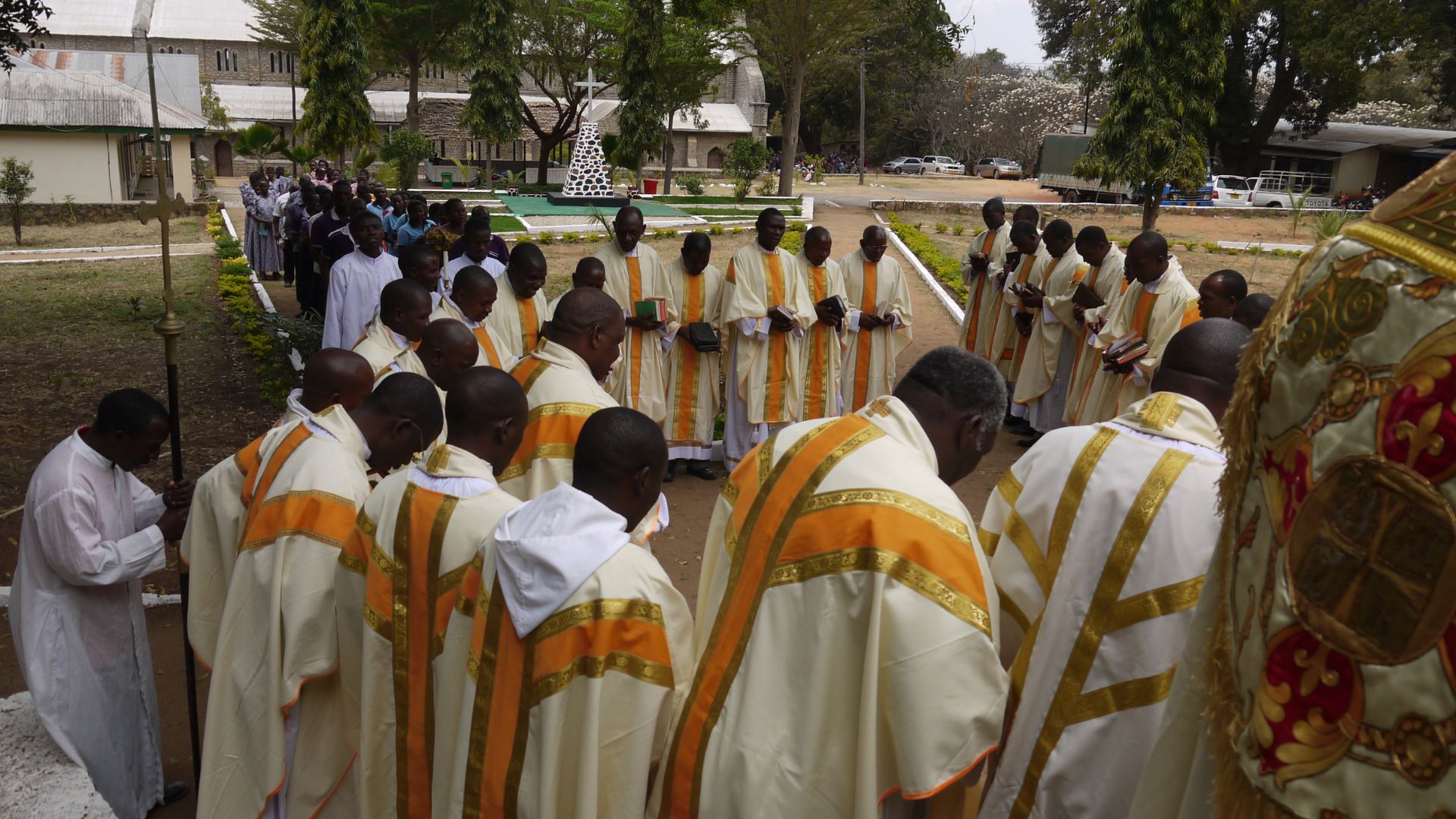
Bishop Richard will lead a small group of colleagues and church leaders from our Diocese on a missional visit to…
Video for September 17th, 2026 Hello everyone and welcome to this week’s video. Last week, I was on one of…
Video for September 10th, 2026 Hello everyone and welcome to this week’s video. There is very little more stressful than…
Video for September 3rd, 2026

Rev’d up and ready to go – Bishop Richard’s 24-7 Prayer Pilgrimage As part of the 24/7 prayer movement’s Global…