Parish Magazine God’s Acre Content – November 2026
Evergreen Immortals: Yew tree Folklore

In this week’s video from Tanzania, the Bishop reflects on what we can learn from the joy, faith and hope of the growing Church there.
Hello everyone and welcome to this week’s video, my second from our trip to our link diocese of Masasi in Tanzania, although slightly out of sequence on a timeline.
Last week I reflected on one of the cultural differences we experienced while we are here: the role and attitude to authority. This is something every culture has had to work through; all cultures and political system struggle with it, simply in different ways. But there are always elements of another’s culture that one admires, wishing there was more of it in our own. In the case of Tanzania, it is joy, hospitality and a refreshing lack of cynicism, often in the face of very challenging circumstances. Masasi diocese is 100 years old; Hereford is 1350. That great age can bring a jadedness; it amplifies the attitude that ‘we tried that and it didn’t work’. New ideas are viewed through the lens of suspicion.
But one doesn’t sense any of that here. Faith seems to permeate every conversation. After the enlightenment in the West in the eighteenth century, faith became increasingly compartmentalised. Culture demanded faith be restricted to the private and the world of opinion. That hasn’t reached here yet. A few years ago, they realised that many younger Anglicans were being drawn into the Pentecostal churches. Rather than observe cynically from the sidelines, critiquing everything they were getting wrong (and it was a lot), they reflected on what they were getting right and incorporated it in their own practice. So, the service of ordination today was deeply liturgical, culturally engaged and spontaneously charismatic. The whole thing was suffused with joyful celebration as five deacons and seven priests were ordained to serve the church. The church here is growing in an extraordinary way. New churches are being planted, people are finding faith in Christ and communities are being transformed to better reflect the values of the kingdom of God.
My sermon at the ordination service majored on humility as a foundation for fruitful ministry. But the passage in Philippians goes on to describe what that humility entailed for Jesus. “Jesus humbled himself by becoming obedient to death – even death on the cross!”
One of the most moving moments of our trip was when Bishop James took us to his former parish on the outskirts of town. In 1876 the very first missionaries arrived in this part of Tanzania. In 1877 the first 16 new believers were baptised. The first church was built by the nattily named Rev. Chauncy Maples in 1881. You could see the development of Christian faith in that one site. The tiny first church; the now crumbling second church and the larger current building that seats 400 comfortably and is now getting too small. Those first missionaries were driven by a passion for the Gospel and followed God’s call in a sacrificial way across the sea. There was great danger from suspicious locals and tropical diseases for which they had no resistance. They also had to learn a new language without Duolingo – no mean feat in itself. I’m sure their grace, humility and sacrificial obedience would have given convincing evidence that the message they brought was true. There was no moral or spiritual relativism here. For them the Gospel was the truth that everyone needed to hear and they were prepared to make what ever sacrifices were necessary to follow God’s call to wherever he led them to do it. It would be naïve and foolish to suggest a wholesale adoption of the practices of the Tanzanian church in our very different cultural setting. We couldn’t do the ululation for one thing. However, the principles that lie behind such fruitfulness: wholehearted obedience to the Lord, putting the Gospel first and preparedness to go beyond our comfort zone can be lived out in any context. As I get older, I am acutely aware of how my own faith can easily drift into a functional atheism. Everything is safely controlled; there is no need for a substantive day to day trust in God’s provision, because everything is more or less tied up and predictable. Worship could become performative rather than responsive. I hope the experiences of this visit will inspire me to live differently and not require the sorts of crises that our Tanzanian friends contend with daily to shake me out of spiritual lethargy. There is a reason the sorts of things described in the book of Acts are more common here than they are in our culture. There is faith, hope and obedience in good measure. May we see more of it in our Church.
Evergreen Immortals: Yew tree Folklore

In this week’s video from Tanzania, the Bishop reflects on leadership, humility and the importance of showing grace when people make mistakes.
Video for 24th September, 2026 Hello everyone and welcome to this week’s video. As I record this, I’m glad for…
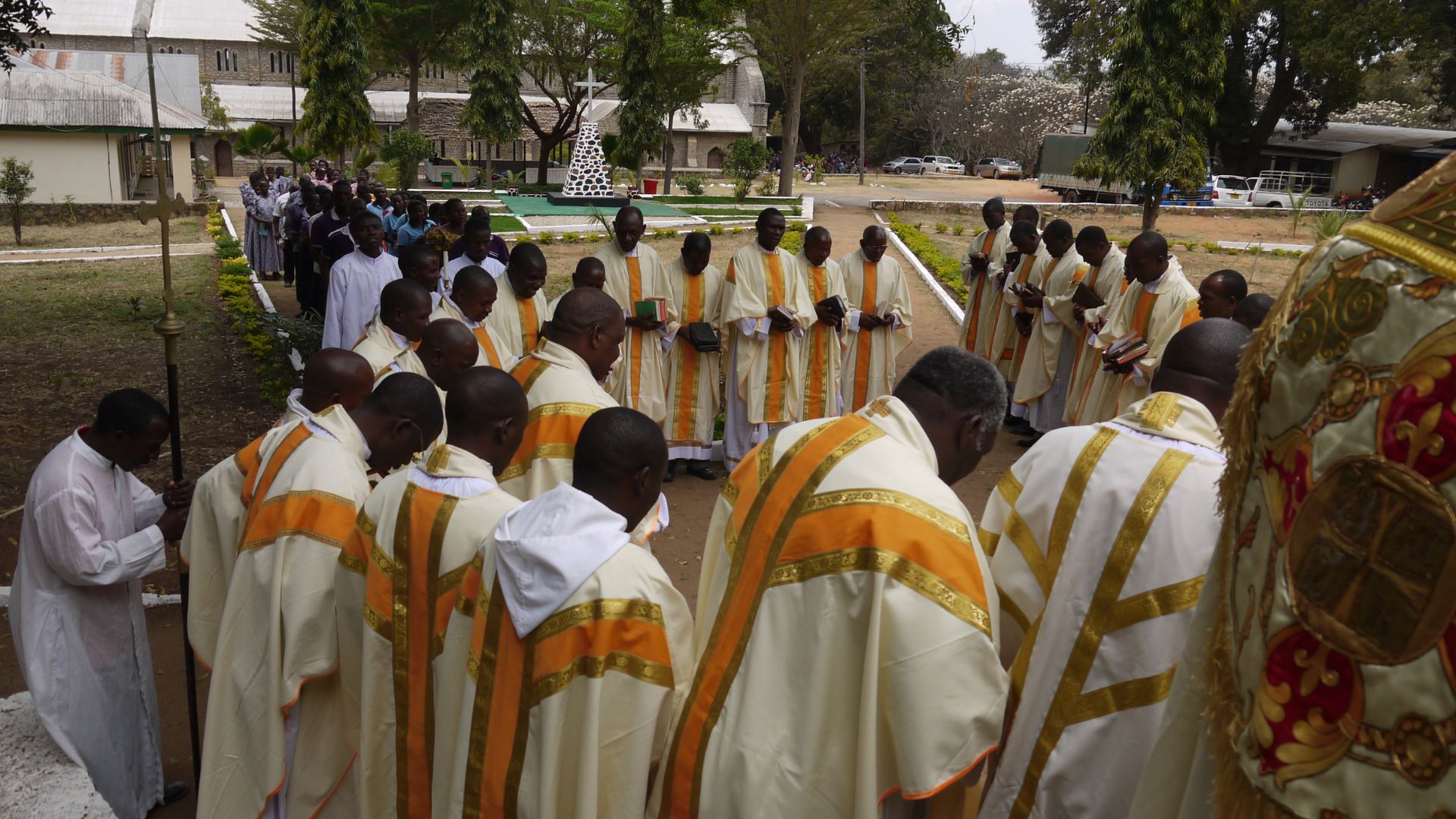
Bishop Richard will lead a small group of colleagues and church leaders from our Diocese on a missional visit to…
Video for September 17th, 2026 Hello everyone and welcome to this week’s video. Last week, I was on one of…
Video for September 10th, 2026 Hello everyone and welcome to this week’s video. There is very little more stressful than…
Video for September 3rd, 2026

Rev’d up and ready to go – Bishop Richard’s 24-7 Prayer Pilgrimage As part of the 24/7 prayer movement’s Global…

NightWatch As the sun sets over our churchyards and burial grounds, a whole other world comes alive. Using some nifty…
Video for July 23rd, 2026. Hello everyone and welcome to this week’s video. This is the last video for the…