

What makes a walk a pilgrimage? by Revd Simon Lockett
Revd Simon Lockett is Vicar of the benefice of Madley with Tyberton, Peterchurch, Vowchurch and Turnastone, in Herefordshire's Golden Valley.…

Revd Kina Robertshaw is the Rector of the Highley with Billingsley, Glazeley, and Deuxhill and Chelmarsh Benefice. She writes here about this year's theme for October's Black History Month, and…
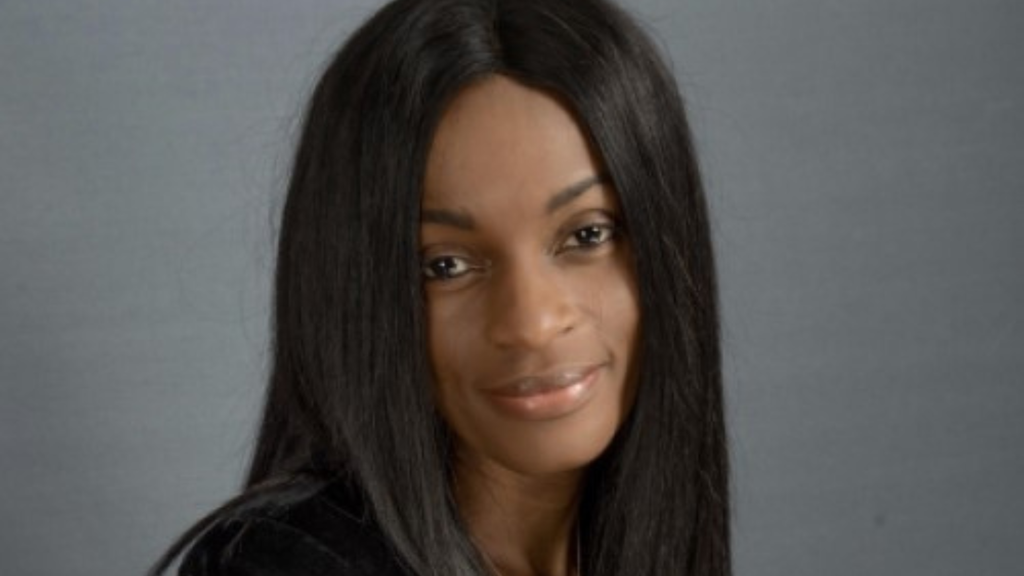
Revd Kina Robertshaw is the Rector of the Highley with Billingsley, Glazeley, and Deuxhill and Chelmarsh Benefice. She writes here about this year’s theme for October’s Black History Month, and wonders ‘who are we failing to see?’
When I was asked to write something for Black History Month on the theme Honouring Our Communities, my first response was hesitation.
I serve in a predominantly white rural community, in a diocese where ethnic diversity among clergy and congregations remains relatively limited. I wondered: what could I write that would be honest, rather than simply saying what might be expected of me?
Then I thought about two young men who arrived in Highley.
They were refugees from Ethiopia, both young adults, arriving in a rural village very different from the world they had known. One spoke very little English; the other had only enough to get by. They were strangers in a new country, trying to find their way in a community where almost everything around them was unfamiliar.
As a church leadership, we realised that this was not simply a situation happening in our community. It was an opportunity for us to ask what it means to be followers of Jesus within our community.
So we returned to the words of Jesus in Matthew 25:
“I was hungry and you gave me something to eat, I was thirsty and you gave me something to drink, I was a stranger and you invited me in…”
We spent time as a congregation reflecting on these words. My encouragement to the church was simple: let us not miss the opportunity God has placed before us to show the love of Jesus.
And something began to happen.
I watched members of the congregation respond. People gave clothing and practical help. They offered friendship, welcome and kindness. Barriers of language, culture and background did not disappear, but they became less important as relationships began to form.
What struck me was that Scripture had helped us to see differently.
Perhaps that is where honour begins.
Honouring people is more than helping them. It is seeing them. It is recognising the God-given dignity of the person standing before us and refusing to define them simply by what they lack, where they have come from, or what they can contribute.
That matters far beyond our experience with these two young men.
In our churches, we rightly speak about encouraging people to serve and participate in ministry. But there is a difference between valuing people and valuing what people can do for us.
Before we ask someone to step up, volunteer, lead or give more, perhaps we first need to ask: Do they know that they are seen? Do they know that they are valued? Have we taken time to recognise what God has already placed within them?
For me, Honouring Our Communities invites us to look again at the people God has placed around us those who have served quietly for decades, those whose contributions are easily overlooked, and those who arrive among us as strangers.
Black History Month rightly invites us to remember and honour those whose stories and contributions have too often gone unseen. But perhaps it can also challenge us to ask: Who are we failing to see today?
Jesus said, “Whatever you did for one of the least of these brothers and sisters of mine, you did for me.”
Perhaps he was not only teaching us how to serve.
Perhaps he was teaching us where to look for him.
Revd Simon Lockett is Vicar of the benefice of Madley with Tyberton, Peterchurch, Vowchurch and Turnastone, in Herefordshire's Golden Valley.…
Joining in with God: In this occasional series for our blog, we hear from people from around the diocese who…

Rev Matthew Stafford is Team Rector of the Wenlock Team Ministry. On Saturday, 19th September 2026 he will be leading…
Is your faith ordinary or extraordinary? Well…the right answer is both. Responding to the call to follow Christ makes an…
“Expect to meet with God!” says Rural Church Missioner, The Rev’d Laura Hewitt I have been working for a year…
It's not just policy, it's personal: Nikki Roberts is the Assistant Safeguarding Trainer for the diocese; here she talks about…

Celebrating our diocese by Fr Guy Cole On 16th May, 2026, we kick off our season of pilgrimages celebrating our…

A Long View: 1,350 Years Behind Us, 1,350 Years Ahead by Ian Hill, Net Zero Project Manager This year, as…

Heather Martin is Youth Hubs Coordinator for Hereford Archdeaconry. Here, she thinks about how God's plan is unfolding in Leominster.…
Honouring our 'local' saints with pilgrimages The Rev'd Steven Baggs is Assistant Archdeacon of Hereford and Vicar of the Frome…